
In a recent report by the European Environment Agency (EEA), the impacts of climate change on marine life were investigated. The key findings from this comprehensive study are:
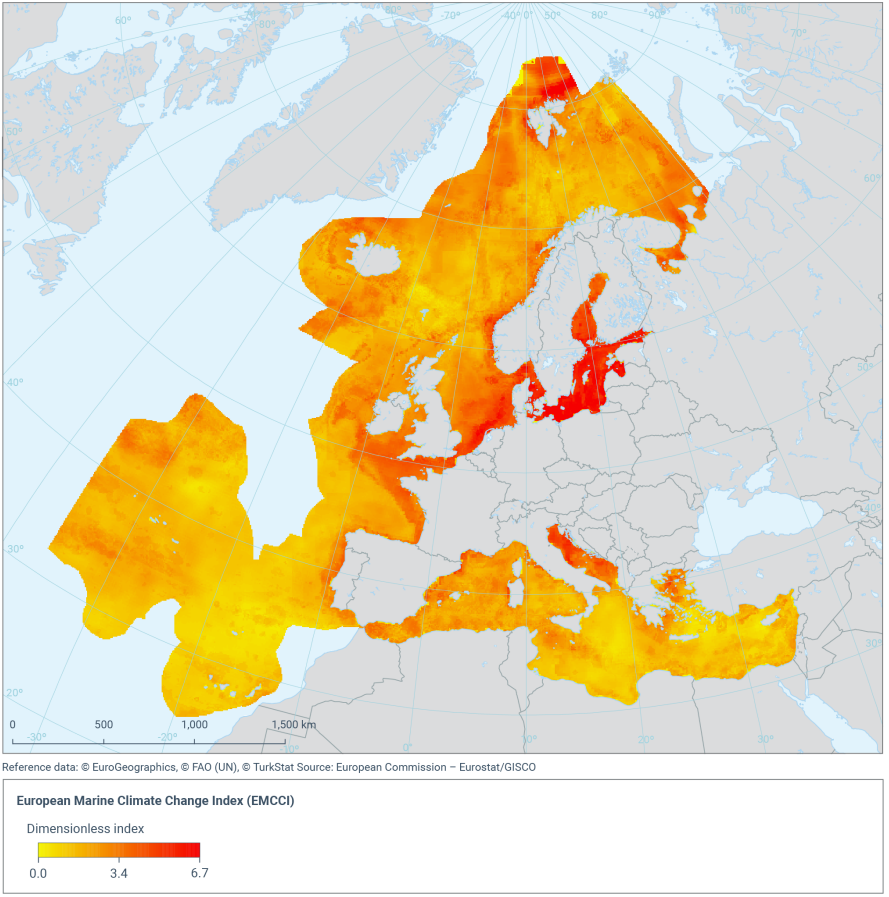
- Varied Vulnerability Across Europe’s Marine Areas: Europe’s marine areas and marine life are unequally vulnerable to climate change. Recent research indicates that climate change may account for up to half of the combined impacts on marine ecosystems.
- Differential Impact on Seas and Coastal Areas: Semi-enclosed seas, such as the Baltic Sea and the Adriatic Sea, along with shallow coastal regions, emerge as particularly susceptible to the effects of climate change. In contrast, deeper offshore areas appear to be more resilient.
- Widespread Degradation of Species: Semi-enclosed seas – the Baltic Sea and the Adriatic Sea for example – and shallow coastal areas are more vulnerable to climate change compared to deeper, offshore areas.
- Vulnerability of Bottom-living Communities and Fish: Bottom-living communities and fish are more vulnerable than highly mobile mammals and birds, for example. This potentially impacts the whole marine food web and dependent fisheries.
- Global Trends in Ocean Change: Globally, oceans are changing. Ocean warming (0.88°C higher in 2011-2020 compared to 1850-1900), oxygen loss (down 3-4% by 2100) and ocean acidification (decreased pH by 30% in 2023 compared to 1700) may be occurring at a speed that may be too fast for species to adapt to the changes.
Moreover, the report credits the contributions of Jesper Andersen, Therese Harvey, and Ciaran Murray from NIVA Denmark. Ciaran Murray is specifically acknowledged for developing the European Marine Climate Change Index map, seen below. The map highlights the most affected seas in Europe. For detailed information, the report’s briefing can be accessed here, and the full report is available here.
For inquiries related to the European Marine Climate Change Index, please contact Ciaran Murray at ciaran.joseph.murray@niva-dk.dk.

 NIVA Denmark